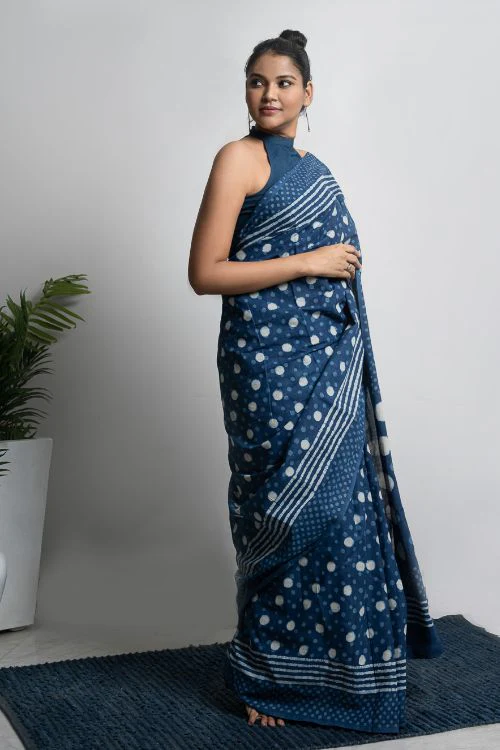
ICH Cotton Appeal. Dabu Hand Block Printed Mul Cotton Saree - Blue Polka
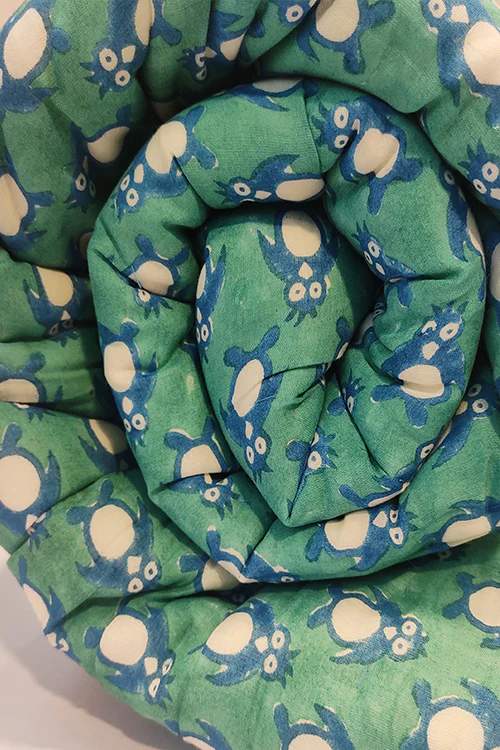
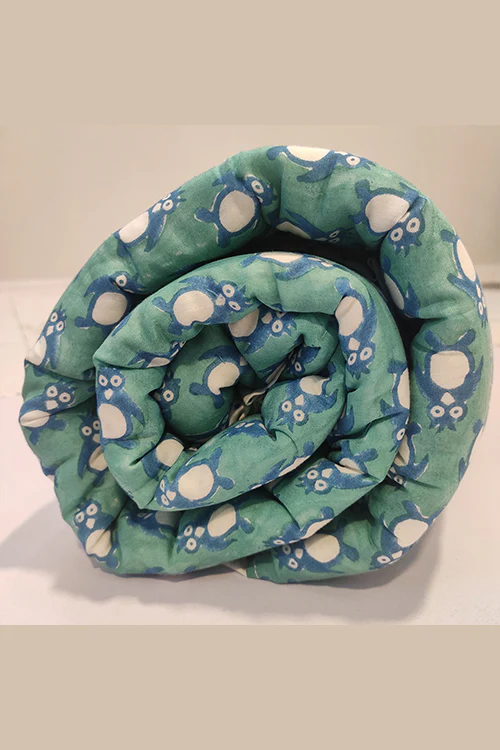
Blue Polka Saree with blouse piece. Striking and stunning in a lovely, vibrant blue Dabu printed Mulmul saree. Dabu printing is a resist dyeing process that entails the application of wax or gum clay mixed with resin to portions of the cloth, using a brush or block, followed by the application of colour. The wax is then washed off in hot or flowing water allowing the colour to seep into the wax treated portions of the fabric, similar to a batik process. This is then followed by block printing to define outlines and shapes. The wax application renders a broken appearance just like batik. Typically vegetable dyes are used, though these days synthetic colours are also used depending on the print requirement.
Original: $2,475.00
-65%$2,475.00
$866.25More Images
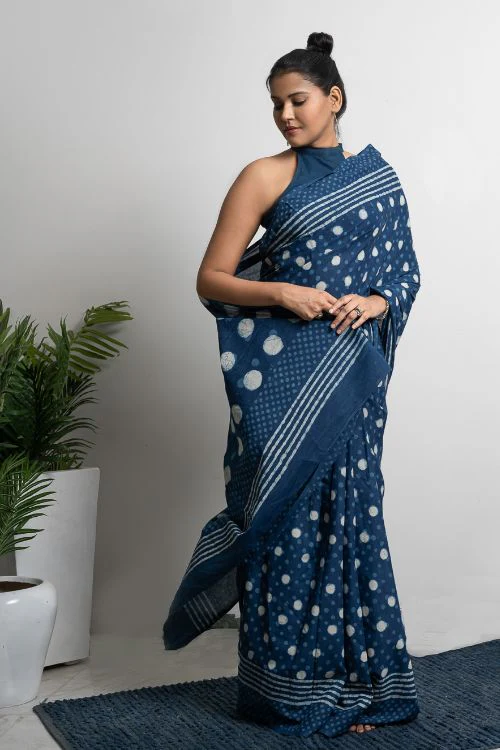
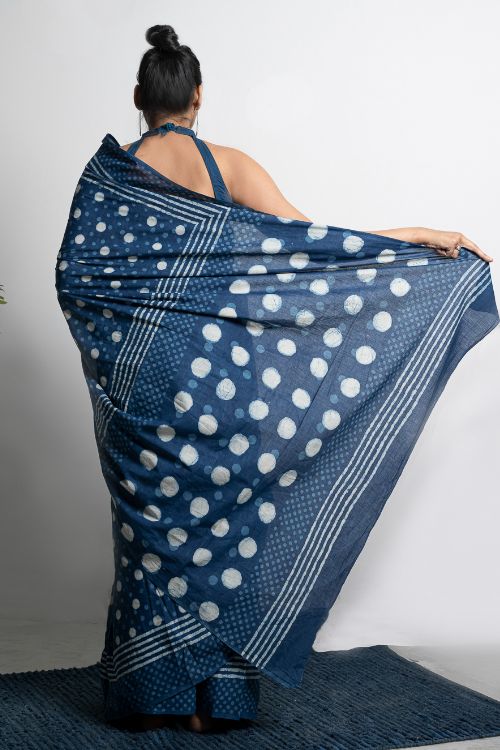
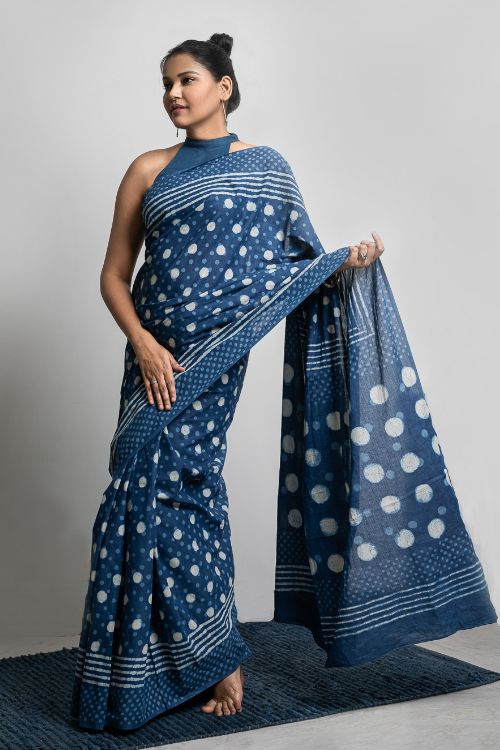
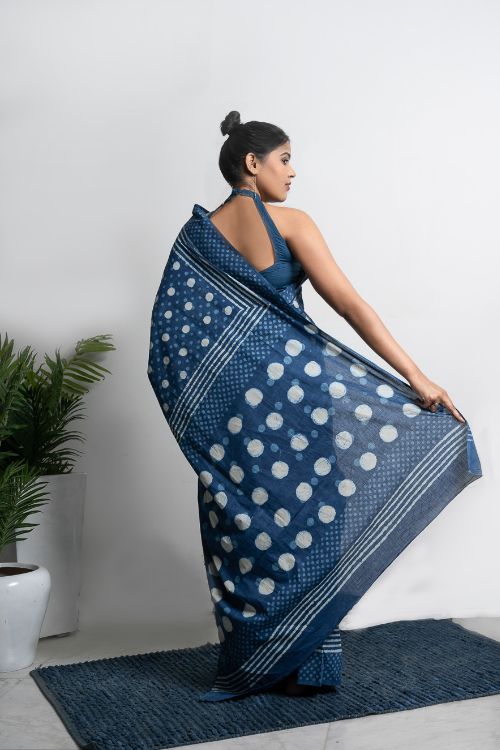
ICH Cotton Appeal. Dabu Hand Block Printed Mul Cotton Saree - Blue Polka
Blue Polka Saree with blouse piece. Striking and stunning in a lovely, vibrant blue Dabu printed Mulmul saree. Dabu printing is a resist dyeing process that entails the application of wax or gum clay mixed with resin to portions of the cloth, using a brush or block, followed by the application of colour. The wax is then washed off in hot or flowing water allowing the colour to seep into the wax treated portions of the fabric, similar to a batik process. This is then followed by block printing to define outlines and shapes. The wax application renders a broken appearance just like batik. Typically vegetable dyes are used, though these days synthetic colours are also used depending on the print requirement.
Product Information
Product Information
Shipping & Returns
Shipping & Returns
Description
Blue Polka Saree with blouse piece. Striking and stunning in a lovely, vibrant blue Dabu printed Mulmul saree. Dabu printing is a resist dyeing process that entails the application of wax or gum clay mixed with resin to portions of the cloth, using a brush or block, followed by the application of colour. The wax is then washed off in hot or flowing water allowing the colour to seep into the wax treated portions of the fabric, similar to a batik process. This is then followed by block printing to define outlines and shapes. The wax application renders a broken appearance just like batik. Typically vegetable dyes are used, though these days synthetic colours are also used depending on the print requirement.